


Switches | Outlets | Troubleshooting | LED Tube Lights | Basic Electricity | Ballasts | Replace Ballasts | Misc Articles
About Privacy Policy Question? Copyright © 2026 Electrical101.com Terms of Use
How to Troubleshoot Electrical Outlets
If a Plug is Loose or Falls Out of Outlet
A plug should always fit tightly into an outlet. An outlet uses tension on the plug’s prongs to maintain a tight connection. If a plug is loose or falls out of an outlet, the outlet needs to be replaced. A loose plug can cause excessive heat and possibly damage whatever is plugged into the outlet.
Common Causes of an Outlet not Working
- Tripped GFCI or AFCI outlet, including outlets connected to the load side.
- Loose wire(s) on the outlet terminals.
- Bad wire nut connection.
- The outlet fails internally (power is present at the outlet terminals but not at the plug end).
- Tripped circuit breaker.
How to Test an Outlet
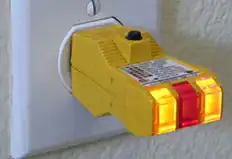
The best way to test an outlet, including GFCIs and AFCIs, is with an outlet tester. A test may be done to determine if power is present at the outlet and if it is wired properly. This tester will show the status of the line, neutral, and ground. An outlet tester does not have a battery.
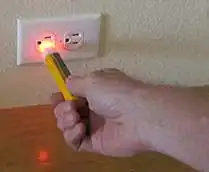
Another way to test an outlet is with a voltage detector. The tip is placed in or near the line side of the outlet. This tester will only test for voltage on the line part of an outlet or cord (not neutral or ground). Always use a voltage detector on a known good circuit before use to verify the detector is working properly.
Ground
Neutral
line
Voltage Detector
Outlet Tester



How to Test a Switched Outlet
The first thing to check is if the outlet has power. If the outlet has no power, see Troubleshooting Single Pole Light Switch.
